

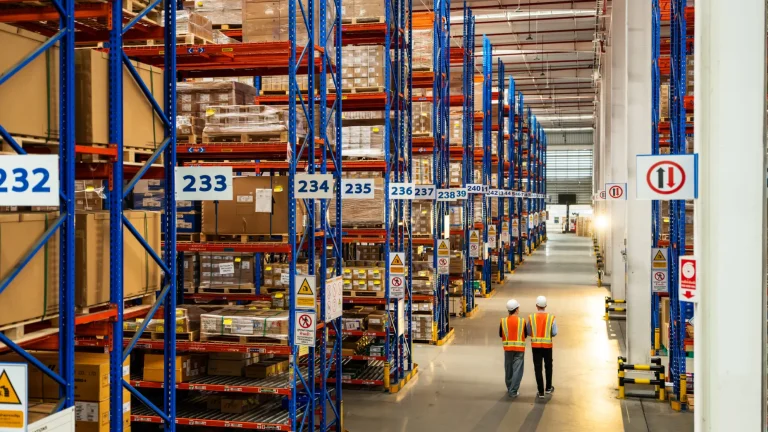
The warehouse real estate outlook is shifting toward stability after a period of extreme volatility. Following a pandemic-fueled boom and a sharp correction, supply and demand are finally rebalancing. Consequently, new dynamics are emerging, driven by reshoring, technological demands, and a focus on efficiency over pure square footage. This creates a more nuanced but active market for investors and developers.
The Big Picture: A Market in Rebalance
The frenzy of e-commerce expansion has cooled, yet demand persists in new forms. New construction has slowed significantly, with big-box completions plummeting from 330 million square feet in 2023 to just 48 million in the first half of 2025. Meanwhile, federal policies encouraging onshoring of manufacturing are injecting fresh demand into the sector. Rents, which soared during the boom, are now stabilizing and even dipping slightly in oversupplied markets, signaling a move toward equilibrium.
5 Key Trends Defining the 2026 Outlook
To navigate this rebalancing, focus on these critical sectors and drivers.
1. The Big-Box Subsector Stabilizes
Big-box warehouses, which anchor modern logistics, are seeing vacancies near cyclical peaks. However, the gap between new supply and demand is shrinking rapidly. Strong third-quarter 2025 demand indicates the market is finding its footing. Rents are expected to stabilize soon, with growth resuming as the surplus is absorbed. This segment remains vital, especially if interest rates decline and trade policies solidify.
2. Power Emerges as a Top Location Driver
Beyond traditional location factors, power availability is now a critical pricing catalyst. Modern logistics require immense electricity for automation, data processing, and potential on-site manufacturing. As a result, “power-ready” facilities are commanding a premium. Proximity to dense power grids and renewable sources is becoming as important as proximity to highways or ports.
3. Reshoring Fuels Long-Term Demand
Government incentives and supply chain resilience efforts are accelerating manufacturing reshoring. Research from firms like Hines suggests this trend alone could increase overall warehouse demand by roughly 35% over the next five years. This drives need not only for manufacturing facilities but also for supporting warehouse and distribution spaces near production hubs.
4. Proximity and Efficiency Trump Scale
The “race for space” is evolving into a strategy for efficiency. Tenants like Amazon are now leasing fewer, but more strategically located, modern facilities. The focus is on taller, automated buildings closer to consumer populations to enable faster delivery. This shift rewards developers of high-quality, infill logistics assets in power-advantaged locations.
5. AI and PropTech Integrate Deeply
Artificial intelligence is transforming warehouse operations and investment decisions. AI tools analyze optimal locations based on supply chain data and traffic patterns. Within facilities, AI manages inventory and predicts maintenance needs, reducing operational costs. For investors, AI-powered analytics provide deeper insights into market performance and asset valuation.
Strategic Implications for Investors
The current warehouse real estate outlook favors a selective, quality-focused approach. The era of speculative development on pure e-commerce growth is over. Success now hinges on identifying assets with proximity advantages, robust power infrastructure, and adaptability for reshoring or high-tech use.
Markets with strong port connections and manufacturing bases are poised to benefit from trade policy shifts. Additionally, older industrial corridors may see revitalization from defense-related and reshoring demand.
Conclusion: A More Mature, Complex Market
The warehouse sector is maturing. The next phase of growth will be driven by technological integration, energy capacity, and strategic positioning within reconfigured supply chains. While the market is no longer soaring, it is building a more sustainable foundation. For stakeholders, understanding these key trends—power, proximity, reshoring, and AI—is essential to capitalizing on the balanced, opportunity-rich warehouse real estate outlook for 2026 and beyond.
