

The quantum computing real estate boom is beginning to take shape as the technology moves closer to commercialization. Just as artificial intelligence reshaped the data center market, analysts now expect quantum to demand its own facilities. Unlike traditional computing, quantum machines use the principles of quantum mechanics to solve problems far beyond the reach of even the fastest classical processors.
Until recently, quantum remained confined to universities and government labs with little commercial utility. Investment lagged AI by nearly a decade. That picture is now changing. Companies like Microsoft, IBM, Google, and Amazon are advancing fast. Analysts suggest practical adoption could arrive in as little as five years. A report from JLL warns that the commercial property industry must prepare for significant demand.
Revenue from quantum technology remains small today. In 2024, the sector earned less than $750 million. Funding stood at about $2 billion, mainly flowing to startups. Yet forecasts predict a dramatic shift. By 2030, quantum investment could reach $20 billion and generate $100 billion in revenue by 2035. A major breakthrough around 2030 could unleash $50 billion in new investment, echoing the funding surge seen after ChatGPT transformed AI.
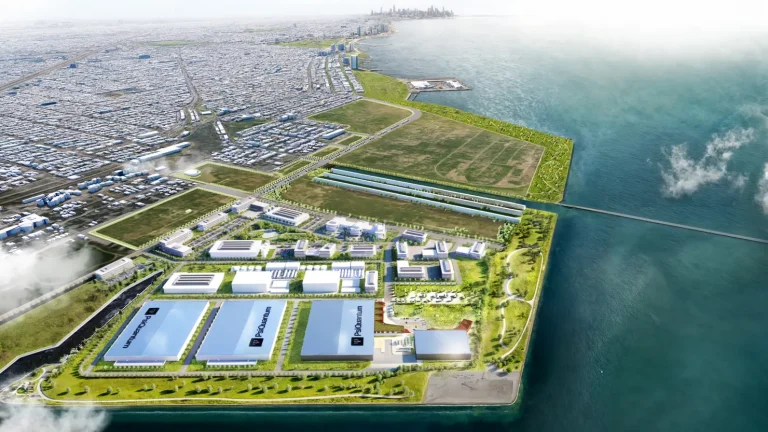
The need for specialized real estate is clear. Quantum machines require electromagnetic shielding to block external noise from vibrations, sound, or magnetic fields. They also demand infrastructure that existing data centers cannot easily provide. For now, most systems remain concentrated around research hubs. The top 20 markets include Chicago, Boston, Southern California, Colorado, Maryland, and New Haven. Chicago is emerging as a showcase, with PsiQuantum developing a 128-acre Illinois Quantum and Microelectronics Park in a former steel mill. The site will span 5.6 million square feet and has strong state backing.
Private development still represents less than 20% of the U.S. quantum market, but momentum is growing. Analysts argue that the commercial breakthrough point will trigger rapid expansion. Companies want proximity to academics, skilled workers, and government programs, making regional hubs critical. Chicago currently leads as a model, but other cities with research depth are also preparing to compete.
A major question surrounds the relationship between quantum systems and data centers. For now, traditional centers will not host quantum computers directly, since their physical design differs and shielding is essential. However, quantum is not a replacement for cloud infrastructure. Instead, it will complement existing data centers. Redevelopment, greenfield construction, and integration are all possible. Analysts say cloud services may become a vital link, merging AI with quantum to accelerate performance.
The quantum computing real estate market is still in its infancy. Industry leaders stress that education and close monitoring remain vital. Investors, developers, and governments are watching closely for the moment when commercial adoption begins. If projections hold, the shift could mirror the AI revolution, reshaping both technology and the real estate industry that supports it.
