




Choosing the best indoor plants starts with matching them to your home’s unique light conditions. Whether you have a dim corner, a sun-drenched windowsill, or something in between, there’s a resilient, beautiful plant that will thrive. In fact, the key to success lies in selecting species suited to their environment—because even the hardiest plants struggle if placed in the wrong spot. Therefore, understanding your space is the first step toward a flourishing indoor garden.
Below, we’ve curated 24 of the best indoor plants, organized by light requirement, so you can create a lush, healthy indoor garden anywhere.
Best Indoor Plants for Low Light
Pothos (Epipremnum aureum)
This trailing vine tolerates neglect and low light with ease. Moreover, its heart-shaped leaves come in green, golden, or variegated patterns. Water when the top inch of soil dries out. As a result, it’s perfect for beginners or busy households.
Philodendron (Philodendron spp.)
Similar to pothos, philodendrons adapt well to shade. They grow quickly in medium light but survive in dim rooms. Additionally, keep soil evenly moist but not soggy. For this reason, they’re excellent for offices or north-facing rooms.
Prayer Plant (Calathea spp.)
Known for its striking pinstripe or marbled foliage, the prayer plant prefers indirect light and high humidity. For best results, use distilled water to avoid leaf browning. Otherwise, tap water may cause crispy edges.
Bird’s Nest Fern (Asplenium nidus)
With broad, arching fronds, this fern thrives in steamy bathrooms or north-facing rooms. Importantly, water around the edges to prevent crown rot. Yellow leaves usually signal overwatering, so monitor closely.
ZZ Plant (Zamioculcas zamiifolia)
Nearly indestructible, the ZZ plant stores water in its stems and survives weeks without watering. Consequently, it’s perfect for offices or hallways with minimal light. Just remember: all parts are toxic, so keep it away from pets and children.
Parlor Palm (Chamaedorea elegans)
A classic low-light palm, it adds tropical elegance without demanding much care. Specifically, water when the soil surface feels dry. Also, avoid trimming healthy green fronds—they won’t regrow.
Peace Lily (Spathiphyllum spp.)
This plant blooms white flowers even in shade. Furthermore, it purifies indoor air. Keep soil consistently moist and away from cold drafts. However, never let it sit in standing water.
Chinese Evergreen (Aglaonema spp.)
With bold, patterned leaves, it tolerates low light and dry air. Notably, darker varieties need less light than variegated ones. That said, avoid placing it near AC vents or drafty windows.
Cast Iron Plant (Aspidistra elatior)
True to its name, this plant endures deep shade, irregular watering, and temperature swings. Therefore, it’s ideal for dark entryways or basements. Plus, it grows extremely slowly—so repotting is rare.
Best Indoor Plants for Medium Light
Fiddle-Leaf Fig (Ficus lyrata)
A dramatic statement plant, it needs consistent medium-bright, indirect light. However, avoid direct afternoon sun, which scorches its large leaves. If leaves drop, check for drafts or inconsistent watering.
Rubber Plant (Ficus elastica)
Glossy, upright leaves make this a favorite for living rooms. To control height, prune the top—and encourage bushiness at the same time. Alternatively, keep it in a smaller pot to naturally limit growth.
Tradescantia (Tradescantia spp.)
Also called wandering Jew, this trailing plant features purple, silver, or green foliage. Similarly, pinch stems to keep it full and compact. Because it roots easily, you can propagate cuttings in water or soil.
Monstera (Monstera spp.)
Famous for its split “Swiss cheese” leaves, monstera grows well near east- or west-facing windows. Meanwhile, let soil dry slightly between waterings. Drooping leaves often mean it’s thirsty.
Watermelon Peperomia (Peperomia argyreia)
Its silver-and-green striped leaves resemble tiny watermelons. This compact plant rarely needs repotting and resists overwatering—making it ideal for beginners. In addition, it stays small, so it fits neatly on desks or shelves.
Polka Dot Plant (Hypoestes phyllostachya)
Cheerful pink, red, or white speckles brighten any shelf. To maintain a bushy shape, pinch back leggy stems regularly. Otherwise, it may become sparse and tall.
African Violet (Saintpaulia ionantha)
Despite its delicate look, it’s easy to grow under fluorescent or filtered sunlight. Since water on leaves causes spotting, water from below instead. With proper care, it can bloom nearly year-round.
Air Plant (Tillandsia spp.)
These rootless plants absorb moisture through their leaves. As a result, mist or soak them weekly. Display them in glass globes or mounted on wood for visual interest. Once it blooms, it will produce “pups” for future plants.
Best Indoor Plants for Bright Light
Alocasia (Alocasia hybrids)
Bold, arrow-shaped leaves demand attention. Place it in a sunny spot with high humidity—and mist regularly or use a pebble tray to maintain moisture. Without enough humidity, leaf tips may brown.
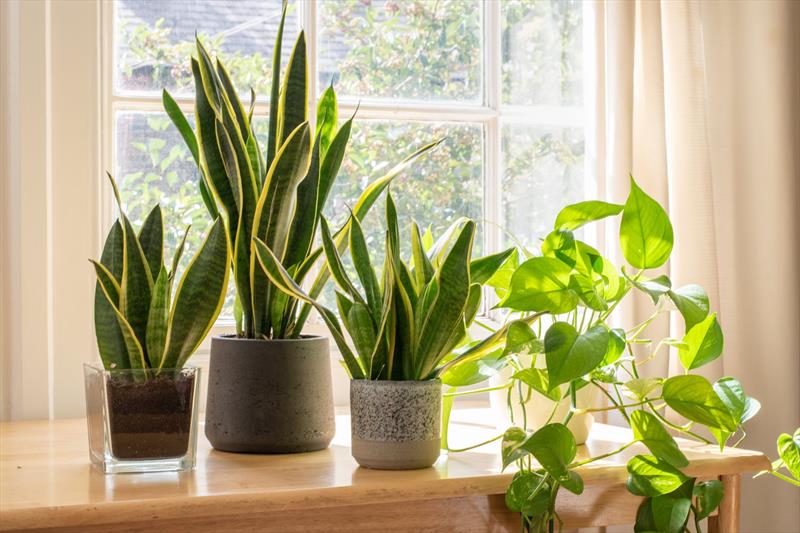
Snake Plant (Sansevieria spp.)
One of the toughest best indoor plants, it thrives in bright light but tolerates low light too. Crucially, water only when soil is completely dry. Overwatering is the most common cause of failure.
Jade Plant (Crassula ovata)
A succulent symbol of good luck, jade prefers direct morning sun. To prevent rot, let soil dry fully between waterings. Interestingly, it can live for decades with minimal care.
Spider Plant (Chlorophytum comosum)
Fast-growing and pet-safe, it produces “pups” you can propagate easily. For optimal growth, hang it near a bright window. What’s more, it helps filter indoor air pollutants.
Kalanchoe (Kalanchoe blossfeldiana)
This succulent bursts with long-lasting flowers. After blooming, give it a rest period—then new buds should form within a month. During dormancy, reduce watering and stop fertilizing.
Haworthia (Haworthia spp.)
A small, rosette-forming succulent ideal for sunny sills. It needs very little water and almost no fertilizer, making it exceptionally low-maintenance. Plus, it stays compact—perfect for narrow spaces.
Aloe (Aloe vera)
Beyond its soothing gel, aloe is a low-maintenance succulent. Grow it in cactus mix and place it in a south- or west-facing window for best results. Occasionally, it may even bloom indoors if slightly root-bound.
In conclusion, the best indoor plants combine beauty, resilience, and suitability to your space. Start with one or two that match your light and lifestyle—then watch your indoor oasis grow. With proper placement and simple care, these plants will enhance your home’s air quality, mood, and aesthetic for years to come. Ultimately, the right plant in the right place makes all the difference.