



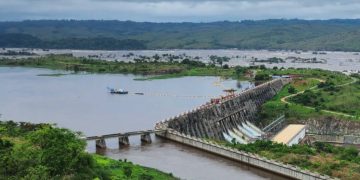


The Russia Congo hydropower project is gaining momentum as Moscow deepens its energy footprint in Central Africa, targeting rural electrification through modular infrastructure. A delegation led by Alexander Novak recently visited the Republic of the Congo to discuss the rollout of small-scale hydropower facilities designed for remote regions.
The proposed plants will have a combined capacity of 2.6 megawatts. Although modest in scale, they are designed to serve communities that lack access to national grids. As a result, the project focuses on reliability and accessibility rather than large-scale output.
According to Rosatom, the modular design allows for faster deployment. In addition, it reduces upfront costs compared to traditional infrastructure. Therefore, the Russia Congo hydropower project offers a practical solution for regions with limited resources and challenging terrain.
Officials emphasize that these container-type mini hydropower plants can operate independently. Dmitry Repin of Rusatom Infrastructure Solutions noted that the systems can be installed quickly and function autonomously. As a result, they suit areas where logistical constraints make conventional projects difficult.
The Russia Congo hydropower project also includes advanced monitoring and security features. Each facility will support remote management, which allows operators to track performance and address issues without being on site. In addition, enhanced security systems will protect installations in remote locations.
This initiative builds on a broader pattern of cooperation between Russia and the Republic of the Congo. In 2024, officials from both countries signed agreements covering multiple sectors. These deals signaled Moscow’s intention to expand its presence in the region.
Energy collaboration remains central to this relationship. In addition to hydropower, both sides have explored the construction of an oil pipeline linking Brazzaville to Pointe-Noire. This project would strengthen domestic energy distribution and improve export capacity.
The Russia Congo hydropower project complements these larger plans. While the pipeline targets industrial and export needs, the mini hydropower plants address local energy gaps. Therefore, the combined approach aims to balance national development with community-level impact.
Discussions have also included the possibility of building a joint oil refinery. Such a facility would allow the Congo to process crude oil domestically. As a result, it could reduce reliance on imports of refined products and increase economic value retention.
Beyond energy, cooperation has expanded into defense. Agreements signed in Moscow have focused on military and naval coordination. This broader engagement reflects a strategic partnership that extends beyond infrastructure projects.
The Russia Congo hydropower project highlights a shift in how energy solutions are deployed in Africa. Instead of relying solely on large-scale projects, governments and partners are exploring smaller, flexible systems. These solutions can reach underserved areas more quickly and efficiently.
For the Republic of the Congo, the benefits could be significant. Rural electrification can support economic activity, improve living standards, and enhance access to services. Therefore, even small-scale power generation can have a meaningful impact.
At the same time, the project strengthens Russia’s influence in the region. By providing funding, technology, and expertise, Moscow positions itself as a key partner in infrastructure development. As a result, it gains both economic and geopolitical leverage.
Looking ahead, the success of the Russia Congo hydropower project will depend on execution and local integration. Efficient deployment and maintenance will be critical to achieving long-term benefits.
Ultimately, the initiative reflects a broader trend in global energy partnerships. Countries are increasingly combining large-scale investments with targeted solutions for underserved communities. The Russia Congo hydropower project stands as a clear example of this evolving approach, where innovation and strategy intersect to address both development and influence.