





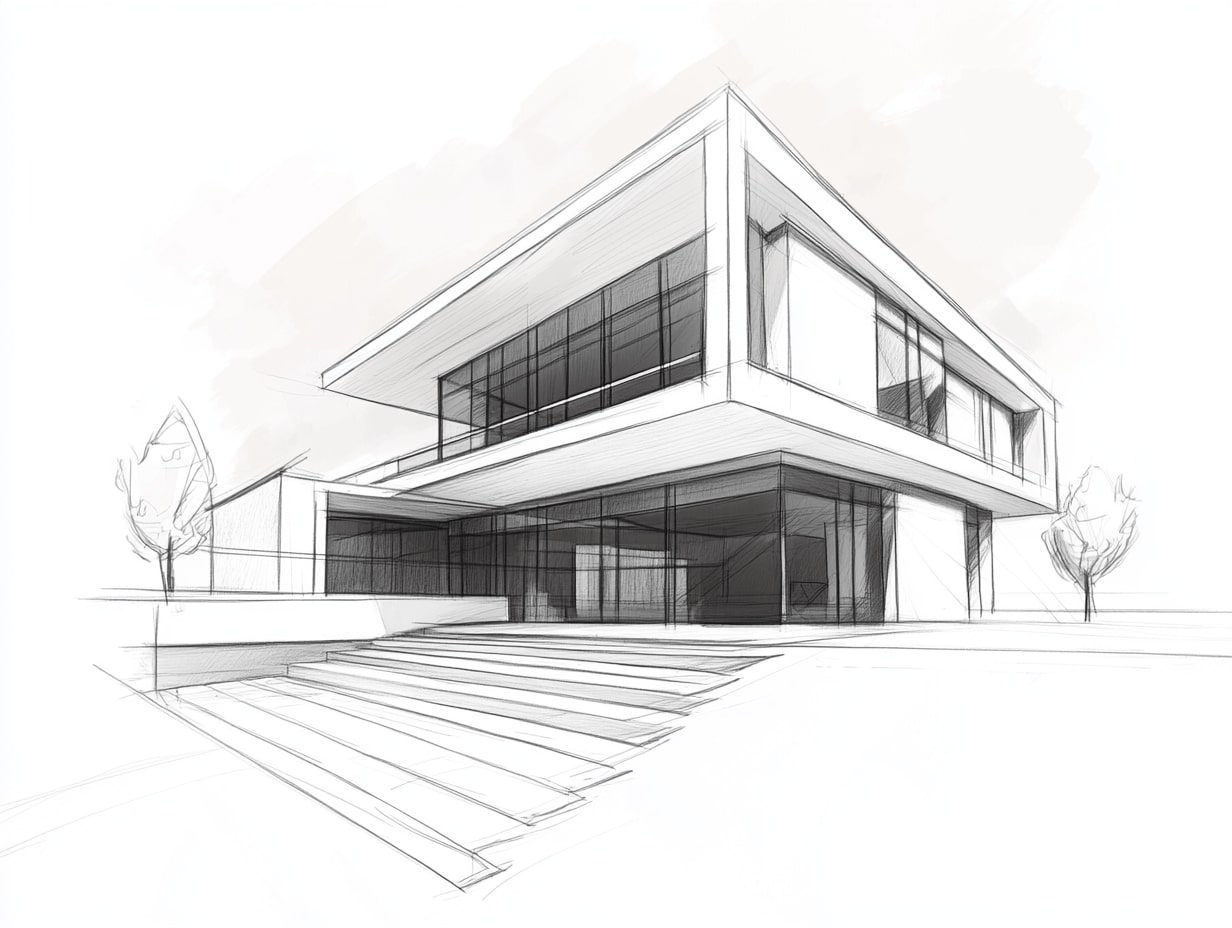

Starting a building project can feel overwhelming, but a solid architectural drawings guide helps demystify the process. These blueprints are the universal language architects use to share their vision with clients, engineers, and builders. Understanding them empowers you to make informed choices and ensures the project runs smoothly.
Floor Plans: The Blueprint of Spatial Layout
Floor plans are among the most important tools in any architectural drawings guide. They provide a bird’s-eye view of the building layout, showing how rooms, walls, doors, and windows relate to one another.
Key features include:
- Accurate room dimensions.
- Load-bearing versus partition wall placement.
- Locations and swing of doors and windows.
- Optional furniture layouts for visualizing usage.
Purpose: Floor plans allow clients to see how spaces connect, making it easier to evaluate flow and functionality.
Elevations: Visualising the Exterior
Elevations are straight-on drawings of a building’s sides—front, rear, and lateral views. A complete architectural drawings guide always covers elevations because they show what the finished structure will look like.
What they reveal:
- Vertical height and facade details.
- Roofing design, slope, and material finishes.
- Window placement and exterior materials.
Purpose: Elevations help verify whether the external look matches the design vision before construction begins.
Sections: Revealing Interior Relationships
Sections slice vertically through a building to show how interior parts fit together. A good architectural drawings guide highlights them because they connect design intent with structural reality.
Key features include:
- How floors, ceilings, and walls interact.
- Staircase connections across multiple levels.
- Wall layers, insulation, and finishes.
Purpose: Sections provide construction teams with the depth they need to build in line with the intended design.
Detail Drawings: Precision at Work
Sometimes the smallest features matter most. Detail drawings zoom in on critical areas such as window frames, staircases, or cabinetry. They ensure accuracy when craftsmanship and measurements must be precise.
Common detail drawings include:
- Window and door frame specifications.
- Trim, moulding, and finishing elements.
- Stair treads, risers, and handrails.
Purpose: Detail drawings guarantee consistent quality and smooth execution of intricate components.
3D Models: Bringing Designs to Life
Modern architectural drawings guide documents often include 3D models. These can be digital or physical, enabling clients to immerse themselves in the proposed design.
Benefits include:
- Realistic visualization of scale and space.
- Understanding how furniture and rooms interact.
- Exploring design variations and material choices.
Purpose: 3D models enhance collaboration by allowing clients to test and refine design elements before construction.
Why Understanding Drawings Matters
Whether building a home or planning a commercial development, grasping the basics of an architectural drawings guide puts you in control. From floor plans to digital renderings, these documents transform an abstract vision into a practical, buildable reality.